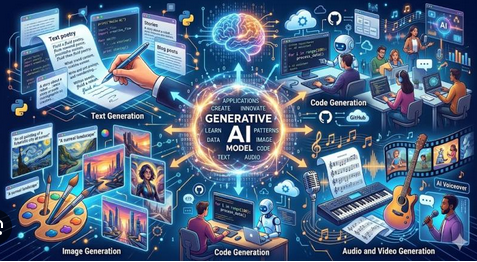
The Multimodal AI industry is rapidly evolving as businesses leverage diverse data types to create more sophisticated and context-aware artificial intelligence systems. This dynamic market is experiencing substantial growth driven by advancements in machine learning models capable of processing visual, textual, and auditory inputs simultaneously, enhancing automation and decision-making processes across sectors.
Market Size and Overview
The Global Multimodal AI Market is estimated to be valued at USD 3.23 Billion in 2026 and is expected to reach USD 20.82 Billion by 2033, exhibiting a compound annual growth rate (CAGR) of 36.4% from 2026 to 2033.
This robust Multimodal AI Market Growth is propelled by rising adoption of AI-powered tools in healthcare, automotive, and retail sectors, highlighting its expanding scope. The market report indicates increased investments in R&D and growing market opportunities, shaping a favorable industry size and revenue outlook through the forecast period.
Market Drivers
– Enhanced Data Availability for Training: A key driver fueling the multimodal AI market growth is the availability of vast and diverse datasets, including images, videos, and text, enabling more nuanced AI training. In 2024, leading technology firms integrated multimodal architectures to improve recommendation systems, witnessing a 25% increase in user engagement. This data-rich environment encourages innovation and wider market adoption, contributing significantly to market revenue and business growth.
PEST Analysis
– Political: In 2025, governments in the US and the EU introduced supportive AI regulatory frameworks fostering ethical data usage, positively influencing investment flows in multimodal AI market companies.
– Economic: The global economic rebound post-pandemic boosted enterprise spending on AI technologies, with the multimodal AI market witnessing a notable uplift in demand from the automotive and healthcare sectors.
– Social: Increasing consumer acceptance of AI assistants and enhanced user experiences based on multimodal interfaces in 2024 have expanded market scope and accelerated market share growth of pioneering market players.
– Technological: Breakthroughs in transformer architectures and sensor technologies in early 2025 have enabled more accurate data fusion models, driving market trends toward higher efficiency and real-time processing capabilities in multimodal AI systems.
Promotion and Marketing Initiative
Effective marketing strategies centered around showcasing real-world applications have played a crucial role. For example, in 2024, a leading solar technology company integrated multimodal AI in smart grid management and launched a global awareness campaign highlighting energy optimization benefits. This initiative not only improved brand recognition but also contributed to a 30% uplift in market share in the respective segment, emphasizing how innovative promotion impacts market growth strategies.
Key Players
– First Solar, Inc.
– Canadian Solar Inc.
– JinkoSolar Holding Co., Ltd.
– Trina Solar Limited
– SunPower Corporation
– LONGi Green Energy Tec
Recent expansions include First Solar’s launch of an AI-powered monitoring platform in 2025, improving plant efficiency by 15%. Canadian Solar Inc. entered strategic partnerships in early 2024 to develop AI-driven predictive maintenance tools, resulting in reduced operational costs. JinkoSolar expanded its AI-enabled research centers globally, intensifying competition and contributing to positive market company growth outcomes.
FAQs
1. Who are the dominant players in the Multimodal AI market?
The market players leading this space include First Solar, Canadian Solar Inc., JinkoSolar Holding Co., Ltd., Trina Solar Limited, SunPower Corporation, and LONGi Green Energy Tec, who are actively investing in AI R&D and strategic partnerships.
2. What will be the size of the Multimodal AI market in the coming years?
The market size is projected to grow from USD 55.45 billion in 2026 to USD 97.56 billion by 2033, driven by broad AI adoption across various end-use industries.
3. Which end users industry has the largest growth opportunity?
Healthcare, automotive, and renewable energy industries exhibit the largest opportunities for multimodal AI applications due to high data complexity and demand for integrated AI-driven solutions.
4. How will market development trends evolve over the next five years?
Market trends will focus on improved AI model integration, real-time multimodal data processing, ethical AI frameworks, and expanding use cases in autonomous systems and intelligent manufacturing.
5. What is the nature of the competitive landscape and challenges in the Multimodal AI market?
The market is highly competitive, with innovation-driven players facing challenges such as data privacy concerns, high R&D costs, and the complexity of integrating disparate data modalities effectively.
6. What go-to-market strategies are commonly adopted in the Multimodal AI market?
Strategies include product innovation, strategic partnerships, focused promotional initiatives highlighting AI application benefits, and targeted investments in key growth sectors to maximize market share and revenue.
➣ Get more insights on: Multimodal AI Market
➣ Get this Report in Japanese Language: マルチモーダルAI市場
➣ Get this Report in Korean Language: 멀티모달AI시장
➣ Read More Related Articles: The Impact of Artificial Intelligence and IoT on Smart Wearable Devices
About Author:
Money Singh is a seasoned content writer with over four years of experience in the market research sector. Her expertise spans various industries, including food and beverages, biotechnology, chemical and materials, defense and aerospace, consumer goods, etc.