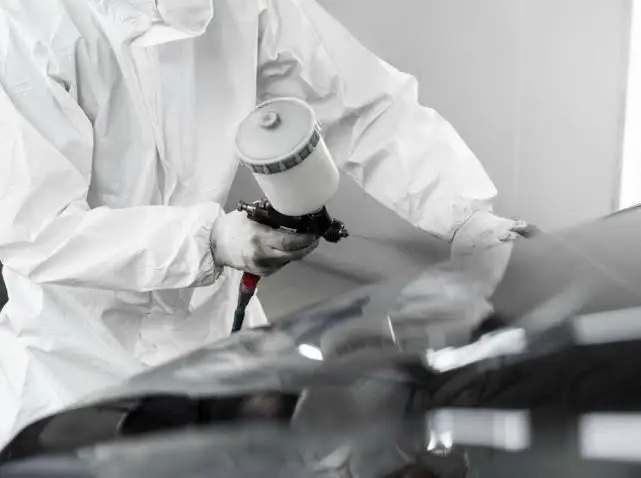
For many car owners, keeping the paint looking new is almost as important as keeping the engine in good shape. A few months of regular driving can leave the exterior covered in tiny scratches, road marks and stubborn stains. Highway trips bring another headache altogether: stone chips.
That is why modern paint protection has moved well beyond wax and polish. Two options that often enter the discussion are PPF film and borophene coating. Both are marketed as advanced ways to protect a vehicle, but they approach the problem from completely different directions.
Understanding that difference is important before spending money on either treatment.
What Exactly Is PPF Film?
PPF stands for Paint Protection Film. As the name suggests, it is a thin protective film installed over the vehicle’s painted surfaces.
Unlike a liquid coating, PPF creates a physical layer between the paint and whatever the road throws at it. Small stones, loose gravel, minor scrapes and everyday contact can hit the film instead of directly damaging the original finish.
PPF is therefore particularly popular on the front bumper, bonnet, front fenders and side mirrors. Door edges and door cups are also common areas for protection.
The film is available in different finishes and constructions. Some products have self-healing top layers that can reduce the appearance of fine surface marks when exposed to suitable heat.
It is worth remembering that PPF isn’t indestructible. A strong impact can damage the film, and severe damage may still reach the paint beneath it.
What Is Borophene Coating?
Borophene coating is associated with a newer class of advanced surface-protection technology. Borophene is a two-dimensional material that has received considerable attention in materials research because of its unusual physical properties.
In automotive detailing, borophene-based formulations are positioned as premium surface coatings. Their purpose is quite different from that of a protective film. Rather than adding a thick physical barrier, a coating modifies the properties of the paint surface.
Depending on the specific formulation, a borophene coating may provide high slickness, water repellency and resistance to everyday environmental contaminants.
However, the exact performance depends on the product formulation and application process. The word “borophene” alone shouldn’t be treated as a guarantee of a particular level of durability.
PPF Film vs Borophene Coating: The Real Difference
Imagine a small stone hitting the bonnet while you’re driving on a highway.
With PPF film, the stone encounters a dedicated protective layer before reaching the paint. The film is designed to absorb and distribute some of that impact.
With a coating, the situation is different. The coating sits directly on the paint and is extremely thin compared with PPF. This makes PPF the more logical choice when stone chips and physical damage are the primary concern.
A coating, meanwhile, is better suited to owners who are mainly looking for improved surface behaviour and easier maintenance.
What About Scratches?
This is another area where expectations need to be realistic.
PPF can protect against many light scratches because the sacrificial film takes the damage first. Certain self-healing films can also reduce the appearance of fine marks.
A coating can make the surface harder and more resistant to some minor marking, but it doesn’t turn the paint into a scratch-proof surface.
If someone regularly drives through congested roads, parks in tight spaces or travels long distances on highways, the physical protection offered by PPF can be particularly useful.
Can You Use Both?
In some situations, combining the two can make more sense than choosing one.
PPF can be installed on high-impact sections such as the front bumper and bonnet. A compatible coating can then be used on the remaining painted areas.
Some PPF manufacturers also allow their films to be coated, although compatibility should always be confirmed before application. Using products simply because they are both labelled “paint protection” isn’t enough.
The preparation and installation process matters just as much. Paint should be properly cleaned and decontaminated, and existing defects should be addressed before protection is applied.
Which One Should You Choose?
There is no universal winner.
Choose PPF film if protecting the original paint from stone chips, scratches and physical abrasion is your main priority. It is particularly useful for new cars that regularly see highway kilometres.
Consider a borophene coating if your priorities are gloss, slickness, water repellency and easier day-to-day cleaning.
Budget and driving habits should also influence the decision. You don’t necessarily need full-body PPF if only the front of the car faces significant exposure. Similarly, you don’t need the most expensive coating simply because it is marketed as the latest technology.
Conclusion
PPF and borophene coating aren’t really competing products in the strictest sense. They solve different problems.
PPF film provides a physical shield against road debris and everyday abrasion, while borophene coating works at the surface level to improve characteristics such as slickness, water behaviour and resistance to environmental contaminants.
For impact protection, PPF has the stronger case. For surface enhancement and easier maintenance, a quality coating can be worthwhile.
The best approach is to start with your actual driving conditions rather than the product label. Once you know what kind of damage your car is most likely to face, choosing the right protection becomes considerably easier.