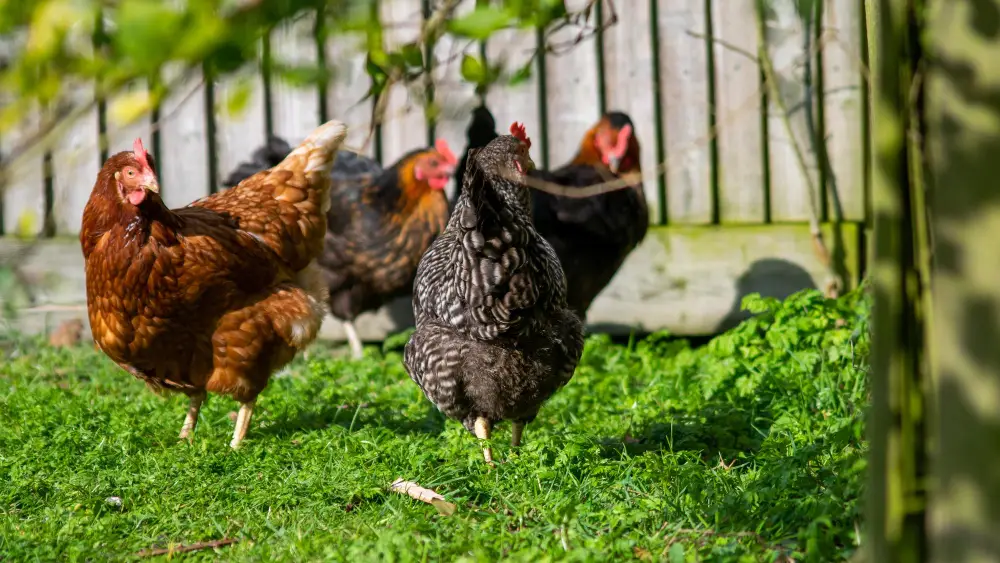
Free-ranging chickens get exercise, sunshine and a natural diet of bugs and greens. They also become easy targets for foxes, dogs, hawks, raccoons and the occasional curious neighbour’s cat. The right fence lets your flock roam while keeping predators out and your vegetable beds safe.
This guide compares the best fencing for chickens that free-range, explains how high and deep a fence should be and shares setup tips that save time and money.
What a chicken fence needs to do
Before you choose a material, decide what job the fence has. Most backyard keepers need it to do three things:
- Keep chickens in – or at least out of gardens, roads and neighbours’ yards
- Keep ground predators out – including animals that dig or climb
- Protect from above – in areas with hawks or owls, especially for smaller birds
A daytime ranging area usually needs a lighter fence than the run or coop where birds sleep. Most losses happen at dusk and at night, so focus your strongest protection there.
Fencing materials compared
1. Welded wire mesh
Welded wire is one of the best all-round choices. The wires are fused at each joint, making the mesh stiffer and harder to tear than woven wire. Look for galvanised or PVC-coated rolls for a longer life.
- Best for: perimeter fences and permanent ranging areas
- Pros: strong, long-lasting, keeps most predators out
- Cons: costs more than chicken wire and needs sturdy posts
2. Hardware cloth
Hardware cloth is a fine welded mesh, usually with half-inch or quarter-inch openings. It is the strongest small-gap option and stops rats, snakes and weasels.
- Best for: coops, runs, vents and the lower section of any fence
- Pros: very secure, hard to chew or tear
- Cons: expensive for large areas
3. Chicken wire (poultry netting)
The classic hexagonal mesh is cheap and easy to work with, but it is designed to keep chickens in, not predators out. A determined dog or raccoon can rip through it.
- Best for: garden dividers, temporary pens and covering a run roof against birds of prey
- Pros: low cost, lightweight, easy to cut
- Cons: weak against predators, rusts faster
4. Electric poultry netting
Portable electric netting is popular for rotational grazing. It comes in rolls with built-in posts and is powered by a mains or solar energiser. The shock teaches predators to stay away.
- Best for: moving the flock around a pasture
- Pros: portable, very effective against foxes and dogs
- Cons: needs regular checks, grass trimming and a reliable energiser
5. Woven field fence or “hog wire”
Field fencing covers large areas cheaply, but its openings are often too big to stop small predators or bantams. Many keepers combine it with a strip of hardware cloth or chicken wire along the bottom.
How high should a chicken fence be?
Most heavy breeds rarely fly over a fence of about four feet. Lighter breeds such as Leghorns, and bantams, can clear much more. As a general guide:
- Heavy breeds (Orpingtons, Brahmas): 4 feet is usually enough
- Medium or light breeds: 5 to 6 feet
- Areas with climbing predators: 6 feet, ideally with an outward-angled top or a hot wire
Clipping the primary feathers on one wing is a quick, painless way to keep flighty birds grounded.
Stopping diggers
Foxes, dogs and badgers often go under rather than over. Two common fixes work well:
- Bury the fence about 12 inches into the ground.
- Add an apron – lay 12 to 24 inches of mesh flat on the ground outside the fence, pinned down with landscape staples or covered with soil. Animals dig at the fence line, hit the mesh and give up.
The apron method is usually faster than trenching and just as effective.
Protecting from aerial predators
Hawks and owls are a bigger risk in open ground. Covering an entire ranging area is rarely practical, so give your flock places to hide instead: shrubs, a covered run, an upturned pallet or even a patio table. A rooster or a few guinea fowl can also raise the alarm. For the run itself, a roof of netting or chicken wire is a simple safeguard.
Setup tips that save time and money
- Measure first. Walk the boundary and note slopes, gates and trees before you buy.
- Use strong corner posts. Wooden posts set in concrete hold tension far better than light steel stakes.
- Combine materials. Hardware cloth along the bottom two or three feet, with cheaper mesh above, gives security without the full cost.
- Check gates. Gaps under gates are a common weak spot. Add a threshold board or mesh skirt.
- Inspect weekly. Look for holes, sagging sections and signs of digging.
For more on matching the fence to your flock and budget, see our guide on how to choose the best chicken fence.
Frequently asked questions
What is the best fencing for free-range chickens?
For most backyards, welded wire mesh with a hardware cloth base and a ground apron offers the best balance of strength and cost. For rotational grazing, electric poultry netting is hard to beat.
Will chicken wire keep predators out?
Not reliably. It keeps chickens contained but can be torn by dogs, foxes and raccoons. Use it for dividers and roofs rather than as your main barrier.
Do I need a fence if my chickens free-range?
A boundary fence is strongly recommended. It protects the flock, your garden and your relationship with neighbours.
The bottom line
Good chicken fencing is about layers: a strong mesh, enough height, protection against digging and secure housing at night. Choose materials based on the predators in your area, invest most in the coop and run, and your free-range flock can enjoy the outdoors safely.